Lake Powell maintenance deserves extra attention after the low-water conditions documented in 2026. For recreational boaters, houseboat operators, and tow-vehicle crews, preparation now means more than a normal engine check. Low elevation can affect ramp access, prop clearance, cooling-water pickup, trailer angles, and the time it takes to get help if a fault appears away from marina service areas.
On August 16, 2026, The Washington Post reported that record-low levels at Lake Powell threatened key water and electricity supply functions for millions of people, which placed the lake’s low-water condition in a broader regional context Washington Post report. For boat owners, that same low-water setting calls for cautious trip planning and preventive work before the hull reaches the ramp.
Lake Powell Maintenance Under Low Water
Water Level And Draft Planning
The research snapshot for September 5, 2026, placed Lake Powell near 3,517.71 feet, down about 3.7 feet over the prior 30 days. It also noted that most motorized launch ramps were closed, with only limited options remaining usable, such as Stateline Auxiliary and Bullfrog North for smaller vessels under the stated limit. Because ramp usability can change quickly, a dockside maintenance plan should begin with the boat’s draft, propeller depth, and trailer setup.
A sound Lake Powell maintenance plan starts before departure. Confirm the ramp you plan to use, identify a backup ramp, and think through whether your tow vehicle and trailer can handle a steeper or longer launch. Check that the propeller has no bent blades, that the skeg is not cracked, and that the lower unit shows no fresh gear oil leakage. If the boat has trim tabs or an outdrive, cycle them at home or at the slip so you are not troubleshooting while blocking a narrow ramp lane.
Lake Powell Maintenance Checks At The Ramp
Low water can expose shallow shelves, sediment, and debris that may not have been a concern during higher-elevation seasons. Before launch, inspect the intake grates, prop area, transducer mount, drain plug, and bilge discharge. A shallow launch can stir sand and silt near the stern, so avoid running the engine longer than needed in churned-up water. If your vessel uses a jet drive, check the intake area before and after retrieval, since small stones and plant material can reduce performance or damage moving parts.
For general pre-trip habits that fit this type of preparation, a related checklist on boat maintenance safety checks gives a useful framework for engines, steering, hulls, electrical systems, gear, weather review, and life jackets. Apply those checks with Lake Powell’s low-water access limits in mind, not as a replacement for manufacturer instructions or a qualified mechanic’s advice.
Cooling, Fuel, And Mussel Prevention
Cooling Water And Debris Control
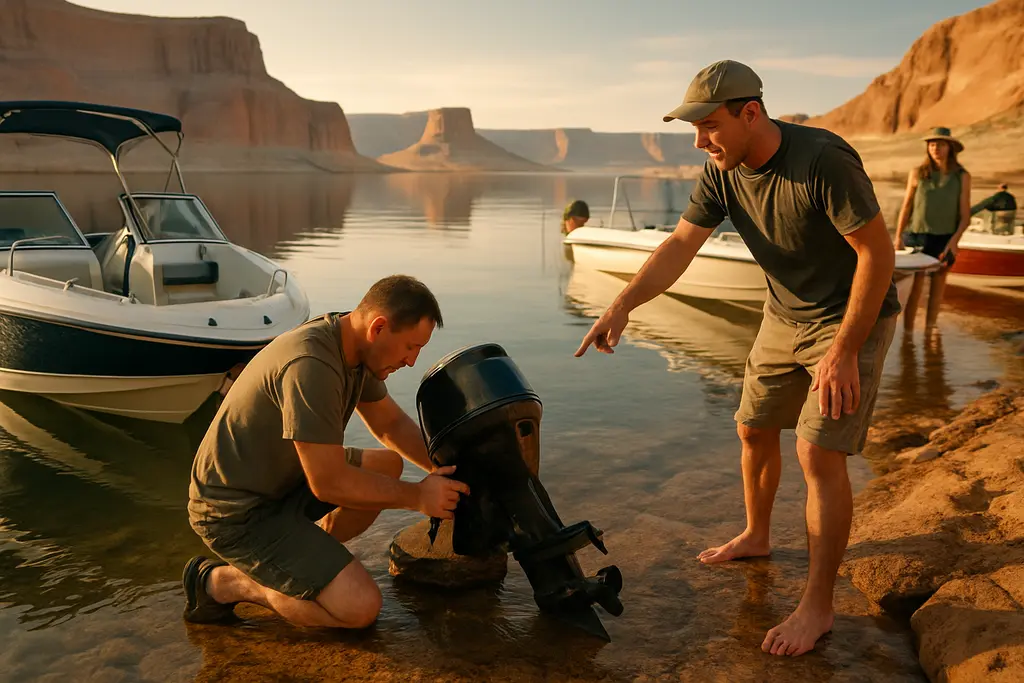
Engines that use open cooling draw lake water into the system, which makes them sensitive to sediment, plant material, and aquatic invasive species. In shallow or silty conditions, a partially blocked intake can raise engine temperature and strain the water pump. Before each trip, inspect raw-water strainers where fitted, look over hoses and clamps, and confirm that belts are not cracked or glazed. After the trip, flush the cooling system according to the engine maker’s instructions, especially if the boat operated in warm, shallow, or debris-prone water.
If repeated clogging occurs, do not assume the issue is normal wear. A qualified marine technician can check the impeller, thermostat, heat exchanger where fitted, hose routing, and intake hardware. Some vessels may be candidates for closed cooling changes, but feasibility depends on the engine package and should be assessed by a trained marine mechanic. For many owners, the safer step is consistent flushing, regular impeller service, and close attention to temperature alarms.
Clean, Drain, And Dry Routine
Utah’s aquatic invasive species guidance says vessels leaving Lake Powell must be cleaned, drained, and dried, including hulls, trailers, engines, live wells, and ballast tanks, to reduce the spread of quagga mussels and related risks Utah mussel guidance. This is not just an environmental task. Mussels and larvae can affect raw-water pathways, screens, pumps, and other wetted equipment, raising the chance of overheating or later repair costs.
Build the clean, drain, and dry process into the same routine as fueling and tie-downs. Pull drain plugs where allowed and required, empty live wells and ballast tanks, lower the drive briefly to drain trapped water, and let compartments dry for the required interval. Do not move water from Lake Powell to another waterbody in bait buckets, bilges, coolers, or ballast systems. If a system cannot be fully drained, seek decontamination guidance before travel.
- Carry spare fuel filters, a belt, hose clamps, absorbent pads, fuses, and basic tools suited to your engine.
- Change aged or suspect fuel before heavy use, and monitor for filter clogging after long storage.
- Inspect bilge pumps, float switches, battery terminals, and gas-line connections before launch.
- Keep cooling intake areas, strainers, and jet-drive grates clear of sediment and plant material.
- Record service dates so small tasks are not missed during busy boating periods.
Trailer And Ramp Readiness
Trailer Hardware On Steep Approaches
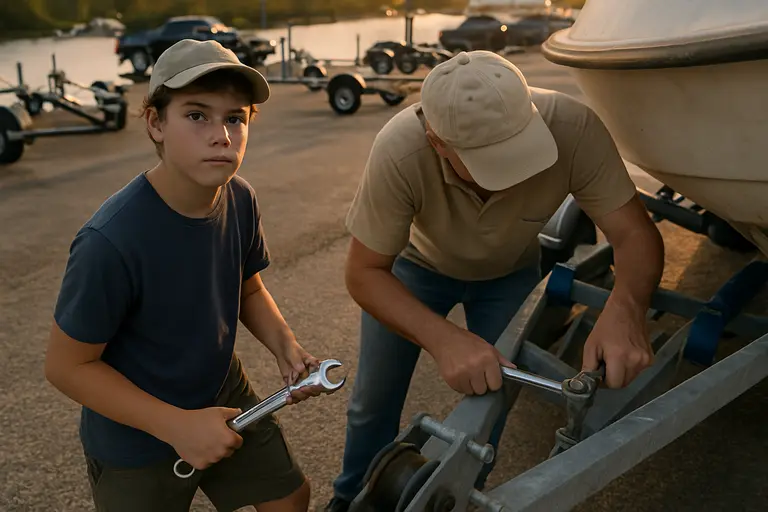
When normal ramps are unavailable or shortened by low elevation, trailer maintenance becomes part of vessel safety. Inspect tires, sidewalls, bearings, lug nuts, bunks, rollers, winch straps, safety chains, and trailer lights before leaving home. A ramp that is steeper or less familiar can put extra load on the winch, bow eye, and tow vehicle brakes. Replace frayed straps and corroded hardware before the trip rather than hoping they will hold under a difficult retrieval.
Check that the boat sits correctly on the trailer. Poor bunk support can stress the hull during long highway miles, while a misaligned winch post can make retrieval harder when the ramp is crowded or shallow. If you changed prop size, added gear, or loaded extra water toys, confirm that tongue weight and trailer balance remain safe under the tow vehicle’s rated limits. Use wheel chocks when staging on a grade, and keep people clear of the winch line during loading.
Repair Access And Self-Sufficiency
The research notes identified out-of-water repair options at Wahweap, including engine, generator, and welding work, but also noted high labor rates. Rather than depending on last-minute service, complete routine work before arrival: engine oil, gear lube, filters, batteries, belts, steering movement, navigation lights, bilge pumps, and fire extinguishers. If the vessel has a generator, test it under load before the trip so cooling, fuel, and exhaust issues appear at the dock instead of on the lake.
Boat clubs, families, and shared-use groups should also assign maintenance roles before launch day. One person can track ramp status, another can inspect trailer hardware, and another can verify safety gear. Related community sites such as the Wakefield Rep illustrate how shared information can be organized effectively for local audiences. Boat groups can adopt a similar approach to manage checklists, float plans, and post-trip repair notes without relying on any public page as a substitute for official lake updates.
Lake Powell Maintenance Before The Next Launch
Treat Lake Powell maintenance as a cycle: inspect before departure, monitor while operating, clean and drain during retrieval, and record repairs after the trip. Low water does not make boating impossible, but it reduces the margin for neglected gear. A clogged intake, weak battery, worn trailer bearing, or cracked fuel hose can become more serious when ramp choices are limited and service access is stretched.
A practical Lake Powell maintenance routine should stay conservative. Use current lake and ramp information before travel, follow the boat and engine manufacturer’s service schedule, comply with Utah invasive species requirements, and ask a qualified technician to address cooling, fuel, steering, or electrical faults that are beyond basic inspection. That steady approach gives the vessel, trailer, and crew a safer chance of handling the added strain of low-water boating at Lake Powell.