
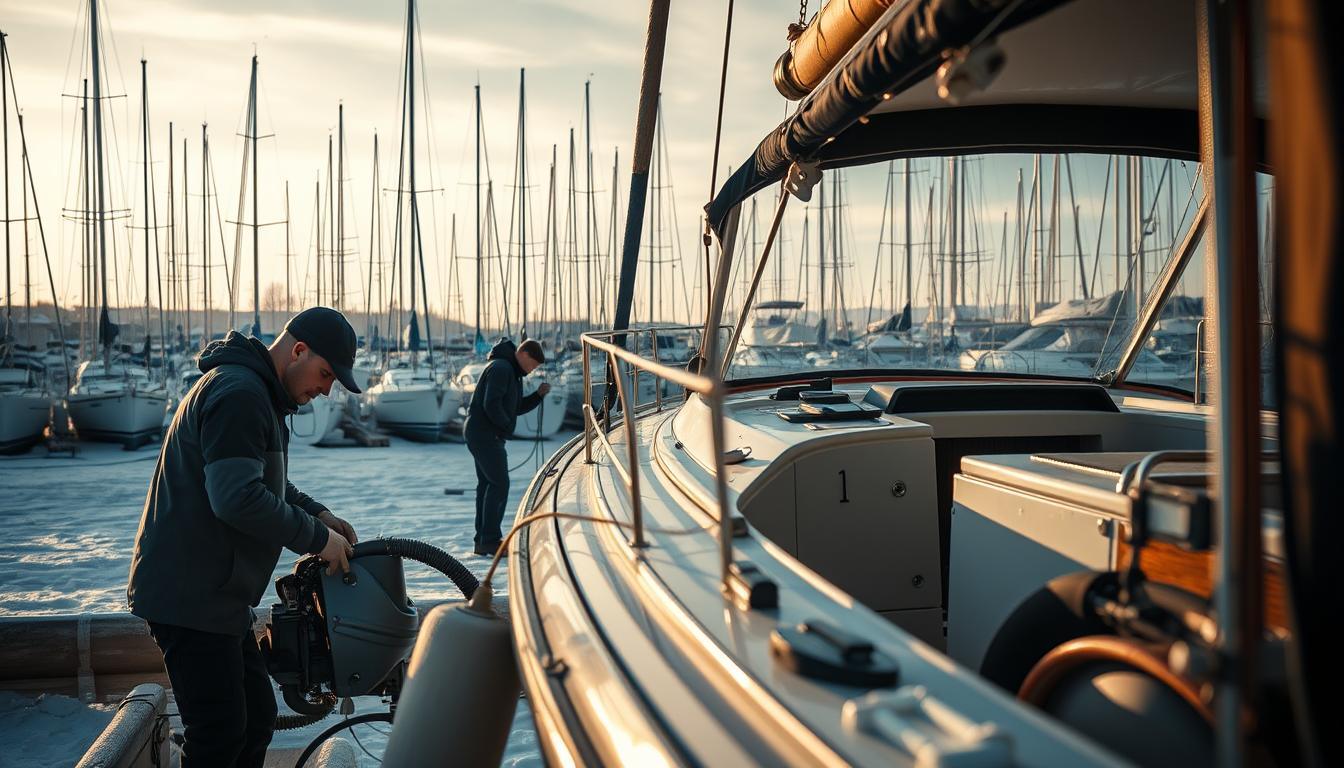
That final autumn cruise feels like saying goodbye to summer. You’re moving from warm decks to cold covers. And from margaritas to antifreeze.
But here’s the truth: boat winterization is more than just a seasonal task. It’s a smart investment, like Warren Buffett would approve.
Think of it as putting your boat into hibernation, not leaving it out in the cold. Finding out your engine has failed is a big disappointment.
This annual task mixes practical boat care with mental preparation. You’re not just a boat owner. You’re a captain getting your boat ready for its winter sleep.
The Importance of Winterization
Think of winterization as your boat’s shield against cold. While you’re watching TV, your boat fights against freezing water. Water expands by 9% when it freezes, which can harm your boat’s systems.
- Cracked engine blocks that turn your boat into a heavy, expensive item
- Burst plumbing that makes your boat leak water inside
- Mold colonies that could grow into their own ecosystems
Winter storage is cheap, like a car payment. But fixing damage in spring costs a lot, like college tuition.
Marine engines are complex, like water parks. Freezing water in them can cause big damage. It expands and can crack your engine block.
The same thing happens in your boat’s water system. When it freezes, it can burst and cause problems.
Winter storage also keeps mold away. Mold and mildew grow in damp, dark places. Your boat’s cabin is perfect for them.
Insurance companies don’t like boats that aren’t winterized. They deny claims and raise your rates. It’s like betting against the house.
Winterizing your boat is smart, not just a sales pitch. You wouldn’t leave your car outside in a storm. Why leave your boat?
We’ve seen engines and cabins damaged by neglect. These problems are common, not rare. They happen when you don’t winterize your boat right.
Your boat is a big investment of money and memories. Taking care of it in winter is the only smart choice. It lets you enjoy your boat for years.
Step-by-Step Service Prep
Boat winterization is like putting your favorite sports car into hibernation. But instead of Italian leather seats, you have bilge pumps. This layup process turns you into a marine technician, ready to tackle the task with antifreeze and determination.
The engine is the first thing to tackle. Flush it with fresh water until the exhaust is clear. Then, add fuel stabilizer to a nearly full tank. This prevents phase separation and keeps your engine from forgetting its fuel over winter.
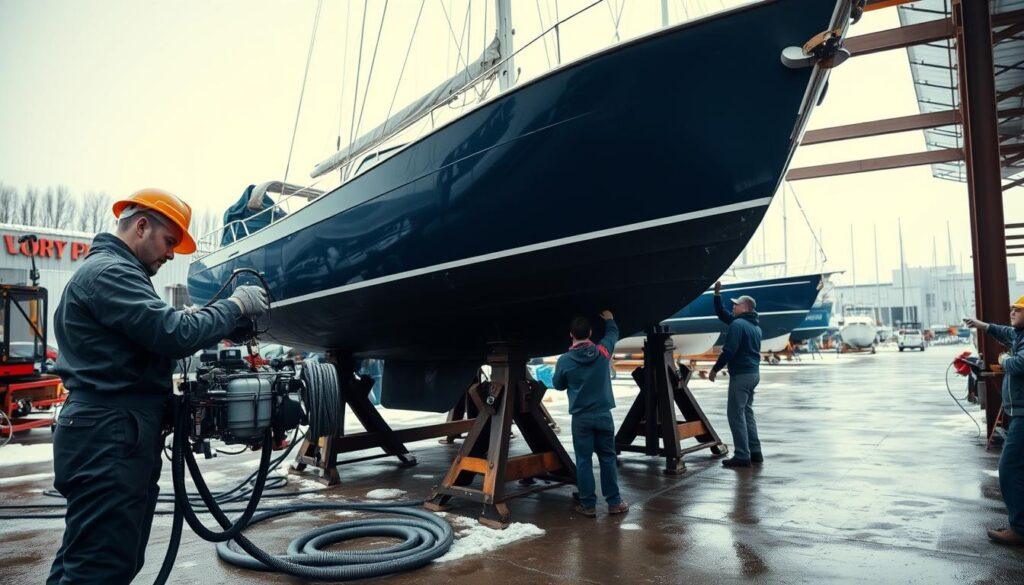
Next, it’s time for the fogging oil ceremony. Spray this magical elixir into the carburetor or intake while the engine runs. It creates a protective coating, like a Renaissance art conservator’s dream. It’s the marine equivalent of putting your engine in a protective bubble.
Now, focus on the plumbing systems. Pump non-toxic pink antifreeze through every water line. This includes freshwater systems, air conditioning, showers, and the head. When you see that pink fluid flowing, you’ll know you’ve given your boat an antifreeze transfusion.
The final cleaning ritual is key. Remove all valuables, food, and moisture-trapping items. Give the interior a thorough cleaning and leave compartments slightly open for air circulation. It’s like tucking your boat into bed with fresh sheets.
| System | Winterization Step | Recommended Product | Time Required |
|---|---|---|---|
| Engine | Flush & fogging | Marine-grade antifreeze | 45-60 minutes |
| Fuel System | Stabilization | Fuel stabilizer | 15 minutes |
| Freshwater System | Drain & antifreeze | Pink RV antifreeze | 30-45 minutes |
| Head System | Complete flush | Marine sanitation fluid | 20-30 minutes |
| General Cleaning | Deep clean & dry | Marine-grade cleaners | 60-90 minutes |
This layup procedure might seem daunting, but each step is insurance against springtime surprises. Proper winterization ensures your boat will be ready for adventure, not needing expensive repairs.
Remember, a well-executed layup is the difference between a boat that survives winter and one that thrives. The process requires patience but offers peace of mind. It’s the nautical version of sleeping well, knowing your investment is protected.
Where to Get Winterization Help Locally
Let’s face it – sometimes it’s smart to ask for help. Getting professional winterization help is not giving up. It’s a smart move for those who prefer relaxing weekends over engine work.
Finding good marine services is like polling – you need solid data. Here’s how to spot the pros:
- Reference checks matter more than Yelp reviews – ask fellow boat owners at the marina
- Look for certified marine technicians, not just “guys who know boats”
- Verify insurance coverage – because accidents happen to the best of us
- Request detailed service quotes – vagueness here should raise red flags
The boat shrink wrap process is complex. DIY kits often can’t match the quality of pros. They use special materials and techniques to keep your boat dry.
When looking at local services, ask about their winterization checklist. Good providers will show you their detailed process for:
- Fuel stabilization and system flushing
- Engine and drive service
- Battery storage protocols
- Interior moisture control systems
Building a relationship with a reputable boatyard is key. The right service knows your boat’s needs by spring. They become part of your boating life, not just a seasonal fix.
DIY can turn into D-I-Why when costs add up. Some tasks, like engine winterization and boat shrink wrap, need experts.
Your boat is a big investment and a source of joy. Letting pros handle winterization means it will be ready for spring.
Storage Options and Rates
Choosing winter storage for your boat is like playing real estate mogul. Instead of looking at schools, you’re thinking about frost protection and your budget. The market has its own rules, where location is key but you need to think about rat barriers and hull support.
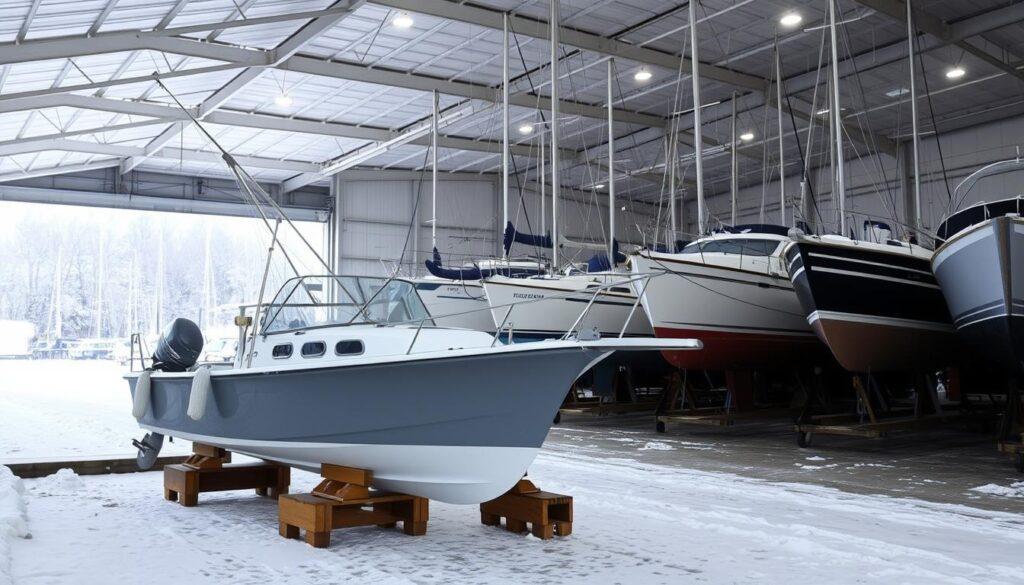
Indoor storage is the top choice for keeping your boat in great shape. It’s climate-controlled and secure, but it costs a lot. This option makes your boat look new, but it might hurt your wallet.
Outdoor storage is more affordable but less protective. It’s like a practical cousin that saves money but exposes your boat more. This choice is about finding a balance between cost and protection.
Cover options also have their own range. Shrink-wrapping wraps your boat like a big package, keeping pests and moisture out. Custom covers fit your boat perfectly, while tarps are a budget-friendly option.
The debate over storing your boat stern-down or bow-first is important. It affects how water drains and how easy it is to get your boat ready for spring. This choice shows if you’re a seasoned sailor or just a casual boater.
Support systems are critical for your boat’s comfort during winter. The right blocking, stands, and cradles are like a good mattress. Without them, your boat might end up with unexpected curves.
When looking at local storage facilities, check their security carefully. You’re not just storing a boat; you’re protecting an investment from weather, pests, and people.
The cost of storage depends on your boat’s value and how much you value peace of mind. It’s like choosing a winter home for a relative. You want security, comfort, and to know your boat is safe from unwanted visitors.
Mistakes to Avoid
Winterizing your boat wrong is like forgetting your anniversary. The damage shows up later, and fixing it costs a lot. I’ve seen more boats damaged by good intentions than by storms.
One big mistake is the improper cover job. Using a cheap tarp like it’s for yard furniture won’t do. It will chafe, trap moisture, and cause mold. It’s like giving your boat a sauna all winter.
Ignoring your fuel system is another big mistake. Not stabilizing your fuel is like leaving milk out. It turns bad and can even explode. The stuff in your engine that looks like varnish? That’s your fuel gone wrong.
Some people forget the little things in winterization. But your bilge pumps, freshwater systems, and air conditioning need care too. Draining without antifreeze lets problems spread.
Battery care is also critical. Leaving batteries connected in storage is bad. They’ll work too hard and die. Corrosion on terminals looks like something from a sci-fi movie.
Storage mistakes make spring commissioning hard. I’ve seen boats with mold and damaged upholstery. Electrical systems can also fail early.
| Mistake | What Happens | Spring Surprise | Repair Cost Estimate |
|---|---|---|---|
| Improper covering | Moisture buildup, mold growth | Interior ecosystem development | $500-2000 |
| Unstabilized fuel | Varnish formation, clogged systems | Engine refuses to start | $800-3000 |
| Battery neglect | Sulfation, complete discharge | Total battery failure | $200-600 per battery |
| System draining only | Residual water freezes and expands | Cracked components, leaks | $1000-4000 |
| Poor storage location | Weather damage, pest invasion | Structural and interior damage | $1500-5000+ |
These winterization mistakes are avoidable. They’re not acts of God but choices. Your boat needs consistent, thorough care, not heroic measures.
Winterization isn’t about making your boat perfect for storage. It’s about getting it ready for the first spring day when everything works right.
Conclusion
As we reach the end of our winterization journey, let’s be honest. Taking care of your boat in winter is more than a task—it’s a mindful act. It’s the difference between launching into spring with joy or facing a huge repair bill.
This yearly ritual is a mix of letting go and keeping things safe. It’s like saying goodbye to summer fun while getting ready for the next one. It’s done with the care of a sailor securing a boat.
Do it correctly, and your boat will be ready to go, not need repairs. Proper winter care shows respect for your boat, honors your adventures, and keeps your bond strong.