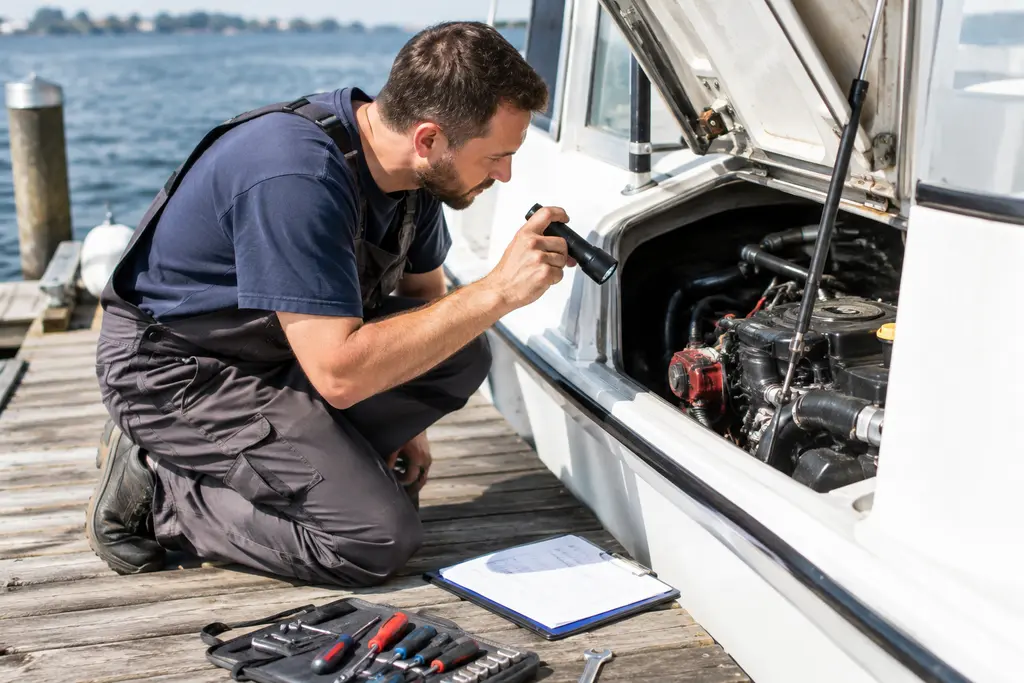
Boat recalls deserve a standing place in every maintenance routine, not just a quick look before buying a vessel. As of October 27, 2026, recent recall data and U.S. Coast Guard safety material show why owners should match hull numbers, model years, installed systems, and repair records before they assume a boat is ready. A recall check cannot prove that every part on board is safe, but it can help reveal known defects that may affect flotation, fuel systems, electrical wiring, glass, bonding, or route-following equipment.
Why Boat Recalls Deserve A Fresh Check
Boat Recalls And Your Hull Number
Boat recalls are usually tied to identifying details such as the hull identification number, manufacturer identification code, model, and year. That matters because two boats from the same brand may not share the same defect, and a repair campaign may apply only to a narrow production group. Before a maintenance visit, sale review, seasonal launch, or long run, copy the HIN exactly as it appears on the transom or registration paperwork, then compare it with manufacturer or dealer records. If the boat has changed hands, do not assume that a prior owner received or completed every notice.
The most practical first step is to treat the HIN like a safety key. Keep it in your maintenance file, share it with the servicing dealer when asking about open campaigns, and save any written proof of completed repairs. For owners building a repeatable process, this related article on recall checks before maintenance explains how HIN details, engine records, and repair proof fit into pre-departure planning.
What The Recent Campaign Numbers Show
As of October 27, 2026, the listed recall data showed 1,107 U.S. Coast Guard recall campaigns involving recreational boats, more than 1.5 million affected units, about 609 manufacturers, 125 unresolved campaigns, and 55 campaigns filed since 2024, according to the Boat Recall Check. Those figures should not be read as a forecast for any single vessel. They do show that recall work is not limited to old boats sitting in the back of a yard. Recent model years can appear in campaign lists, and some defects may not be visible during a casual dockside walkaround.
Safety Defects To Match Against Your Equipment
Electrical, Fuel, And Flotation Issues
The Spring 2026 U.S. Coast Guard Boating Safety Circular listed several examples that owners can use as a reminder of what to check. FLOE International Inc. Varatti Z2272, Z2373, and Z2474 2026 models were listed for improper overcurrent protection wiring on bow thrusters. White River Marine Group Mako Apex 24 and 226 2026 models were listed for a grounding and bonding wire installation defect. Brunswick Family Boat Co. Inc. Bayliner D20, D20i, and D22i 2024 through 2026 models were listed for issues involving flotation foam placement, bilge ventilation, and ignition protection. Bertram Yachts LLC 2021 through 2026 28CC, 34CC, 39CC, and 28XC models were listed for fuel tank seal defects affecting ignition protection, as reported in the Spring 2026 Boating Safety Circular.
Those examples cover systems that most recreational boaters rely on without seeing them every trip. Overcurrent protection helps reduce the risk of wiring damage. Grounding and bonding defects can affect how electrical faults are managed. Fuel tank seal and ignition-protection concerns deserve prompt attention because fuel vapor and ignition sources are a dangerous mix. Flotation foam and bilge ventilation issues may sit out of view, so a clean cockpit or shiny console is not enough evidence that a campaign does not apply.
Glass, Steering, And Route-Following Concerns
The same circular also listed The Marine Group 2026 Largo X, Lago V, and Lago Z models for windshield glass detachment risk, and Volvo Penta Autopilot units for route-following deviations in certain areas. These examples are useful because they move the recall conversation beyond engines and fuel. A windshield issue can affect occupants without warning. A route-following concern should remind skippers that automated steering equipment still requires an alert operator, cross-checks, and manual readiness.
For safety planning, use the listed defect type to guide your questions. Ask whether the repair is inspection-only, part replacement, software-related, or a physical installation correction. Ask who performed the repair and when. If the answer is unclear, keep the boat out of higher-risk use until a qualified service provider confirms the status. A recall notice is not a maintenance checklist by itself; it is one part of a larger safety record.
A Practical Recall Check Routine
Before Maintenance Or A Sale Review
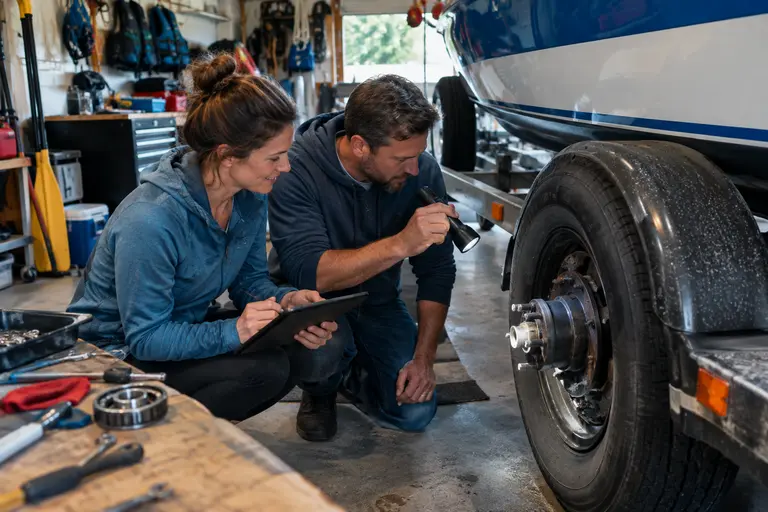
A useful recall routine is simple enough to repeat. Start with the HIN, manufacturer, model, model year, engine details, and major installed equipment. Compare those details with recall sources and dealer records. If a campaign appears to match, record the campaign name, affected component, required correction, and completion status. If the match is uncertain, ask the manufacturer or dealer to verify by HIN rather than by brand name alone.
- Photograph the HIN plate and keep the image with registration and service records.
- Save invoices or letters showing recall inspections, parts, replacements, or software updates.
- Ask whether a defect affects operation before the repair is completed.
- Recheck after ownership changes, major refits, repowers, or electronics upgrades.
- Keep unrelated bookmarks and club communication links, as seen on the related site Talk and Play, separate from the vessel safety file so recall documents stay easy to find.
Before Leaving The Dock
A pre-departure recall check does not need to delay every outing, but it should be part of scheduled readiness. If you have not checked campaigns since the last service visit, do it before carrying guests or making a longer run. Pay close attention after receiving manufacturer mail, dealer messages, or marina notices. If you bought a used boat, check again even if the seller said everything was current. Memories fade, paperwork gets lost, and some campaigns require proof rather than verbal assurance.
Pair the recall review with ordinary safety habits: test bilge blowers where fitted, check fuel odors, inspect battery connections without disturbing protected wiring, confirm steering response, and review the operator’s manual for installed systems. Do not open sealed fuel components, alter electrical protection, or modify bonding wires unless you are qualified to do so. The safer course is to identify the possible campaign, limit use if the defect could affect safe operation, and arrange proper service.
Boat Recalls Maintenance File
What To Keep On Board And At Home
A strong maintenance file should exist in two places: a paper or waterproof folder that can be reached on board, and a backed-up digital copy at home. Include registration, the HIN photo, engine serial numbers, equipment model numbers, recall correspondence, service invoices, and notes from dealer calls. If a campaign does not apply after verification, record who confirmed it and on what date. That note can save confusion during resale, insurance inspections, or the next service appointment.
Use boat recalls as a practical safety screen, not as the only measure of seaworthiness. A vessel can have no open campaign and still need maintenance; a vessel with a campaign may be safe only after the specified correction is completed and documented. The steady habit is what protects crews: verify the identifiers, read the defect description, confirm the repair status, and keep proof where the next operator can find it.