
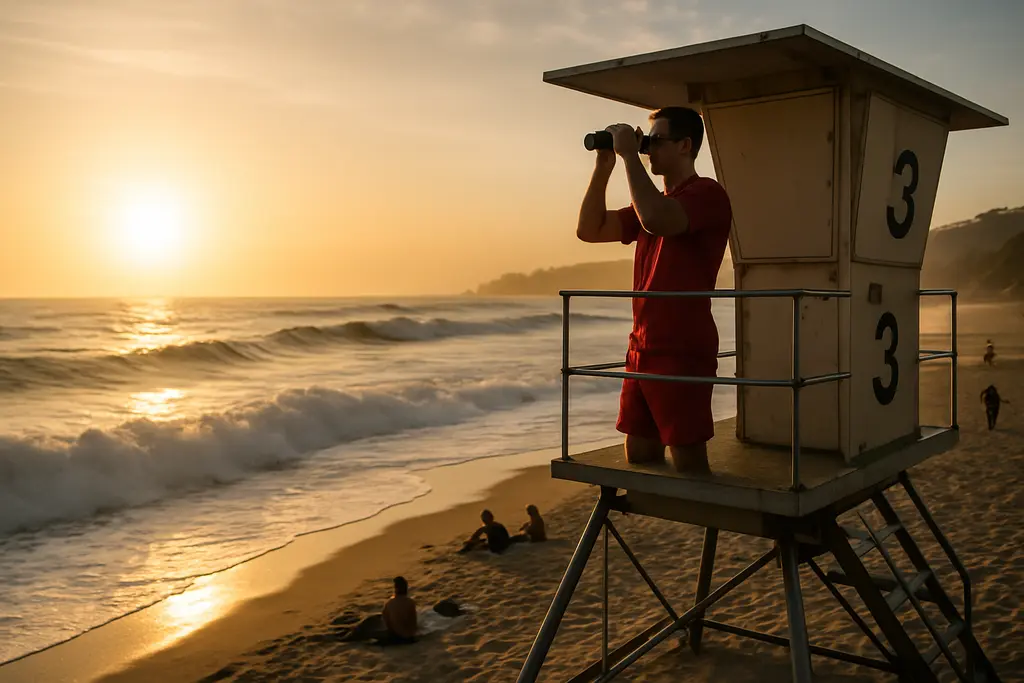
Rip Current Safety along the California coast starts before a bow points toward a beach, cove, pier, or exposed anchorage. Rip currents are a surf-zone hazard, but they matter to boaters because crews often swim from anchored boats, launch paddleboards, run dinghies ashore, or plan beach landings near breaking waves. NOAA reports that rip currents cause more than 80 percent of rescues by surf beach lifeguards in the United States, a reminder that calm-looking water can still carry real force NOAA beach danger guidance.
California boaters work around a varied shoreline of beaches, rocks, piers, jetties, harbors, and sandbars. That variety is part of the appeal, but it also means conditions can shift across a short distance. A beach that looked manageable during a morning pass may look different after tide, swell, or wind changes. My habit is to treat the surf zone as a moving system, not a fixed feature on a chart.
Rip Current Safety Starts With Forecasts
Read The Surf Zone Before Launch
Good Rip Current Safety begins with a forecast check that is specific to the beach or coastal stretch you plan to use. The research notes point to local Surf Zone Forecasts, Rip Current Outlooks, and weather surf reports as practical checks before anyone heads to the beach. For boaters, these products are not just for swimmers. They help answer questions that affect route planning and crew decisions: Is the surf expected to build? Are rip currents likely? Will a dinghy landing expose guests to breaking waves?
A forecast cannot promise safe water. It gives a risk signal. A low-risk outlook does not mean no risk, and a sunny sky does not mean a harmless surf zone. NOAA and Sea Grant warn that rip currents can occur on calm, sunny days when nothing appears dangerous from shore. That matters for boat crews because guests may judge the water by weather comfort rather than by the movement of waves and water near the beach.
Watch Tide, Sandbars, And Fixed Structures
Rip currents are most likely to form where water moving toward the beach finds a focused path back seaward. Research notes identify low tide, gaps in sandbars where waves do not break evenly, and areas near groins, jetties, piers, rocks, or similar structures as common settings. From a boat, that can look like a narrow, darker, choppier, or foam-poor lane through the breakers, though visibility and angle can make signs hard to read.
The practical point is simple: do not use a structure as a shortcut to shore without checking the water beside it. Piers and jetties can create confusing water movement, and a dinghy operator who is focused only on avoiding the structure may miss the outward pull beside it. If the surf pattern is hard to read, choose a safer landing plan, stay aboard, or use a protected harbor facility instead.
How Rip Currents Put Boat Crews At Risk
Small Boats, Dinghies, And Swimmers
Rip currents are especially hazardous to inexperienced or tired swimmers because they can move very fast. The National Weather Service says rip current speeds can reach 8 feet per second, faster than an Olympic swimmer, and advises swimmers not to fight directly against the current National Weather Service rip current FAQ. That speed should change how a skipper thinks about casual swimming near surf. If a guest jumps in without a flotation device or drifts toward a breaking beach, the situation can move from relaxed to serious in seconds.
For boaters, Rip Current Safety also means controlling the edges of the day: where people enter the water, who is watching, what flotation is ready, and how close the boat is to the surf zone. A crew may be safe aboard an anchored vessel while the danger sits only a short swim away. The line between recreation and rescue is often crossed when someone underestimates distance, fatigue, wave energy, or the outward pull of water returning through a narrow channel.
Signs That Should Change The Plan
Do not wait for a dramatic warning sign. A rip current may appear as a break in the line of breaking waves, a channel of churning water, foam or floating material moving seaward, or a difference in water color. Those visual clues are not always present or easy to read from a boat. If the water pattern seems uncertain, that uncertainty is enough reason to keep swimmers aboard and avoid a beach landing.
On California beach runs, shore access deserves the same respect as a harbor entrance. If your outing includes running a tender through surf or landing near exposed sand, it helps to plan an exit route as carefully as the arrival. The same principle appears in local coastal safety planning, including lessons from Point Reyes beach-run safety, where tide, surf, and exit options are part of the decision.
Crew Actions If Someone Is Caught
Escape The Current Without Fighting It
The established advice is not to swim straight back against a rip current. A person caught in one should stay calm, float or tread water if needed, and swim parallel to the shoreline to get out of the narrow current. Once free of the outward pull, the swimmer can angle back toward shore. If they cannot escape, they should call out and wave for help. This advice sounds simple on a calm deck, but it is harder for a frightened or tired swimmer, which is why every crew briefing should cover it before anyone goes in.
A skipper should not assume that a strong pool swimmer can overpower moving surf water. Fitness helps, but panic and fatigue change the situation. If a swimmer is in trouble, keep eyes on the person, alert lifeguards or emergency responders as appropriate, and use flotation from a safe position if it can be done without creating another victim. The safest rescue is often one that keeps untrained helpers out of the same hazard.
Set Rules Before Recreation Begins
Clear crew rules reduce hesitation. Before swimming, paddleboarding, or taking a dinghy ashore, identify who is watching the water, what signals mean return to the boat, and where flotation gear is stored. Avoid casual solo swims near surf. Keep children and weaker swimmers well away from breaking beach zones, even when the weather feels mild. Choose lifeguard-protected beaches for shore recreation whenever available, because immediate trained help improves the safety margin.
- Check the Surf Zone Forecast, Rip Current Outlook, and local surf report before approaching an exposed beach.
- Avoid swimming or tender landings near piers, jetties, rocks, groins, or uneven breaking waves.
- Brief guests to float, stay calm, signal for help, and swim parallel to shore if caught.
- Keep flotation ready before anyone enters the water, not after trouble begins.
- Use lifeguard-protected beaches for shore stops when that option exists.
Maintenance And Equipment Checks For Surf-Zone Days
Prepare Gear For Fast Decisions
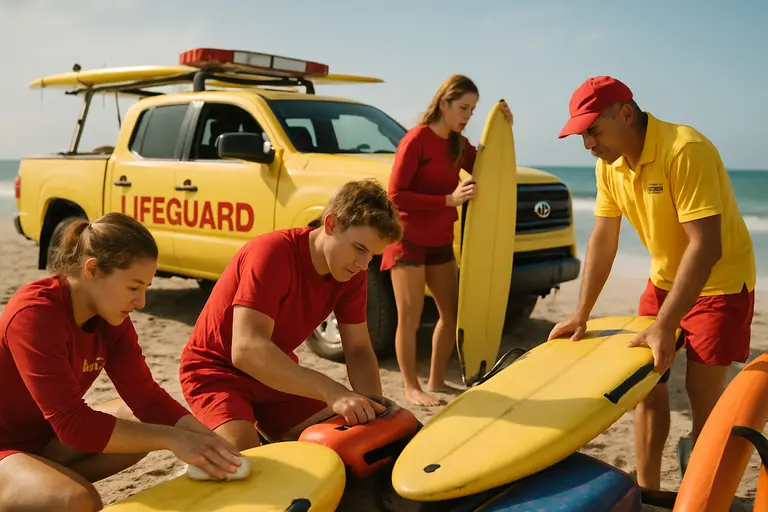
Boating safety often depends on small checks done early. Before a coastal outing with beach access, inspect flotation devices, throwable flotation, tender gear, radios, and basic communication methods. This is not about adding clutter to the deck. It is about making sure the item you need is reachable while someone else keeps visual contact with the person in the water.
Boat maintenance also affects surf-zone choices. A tender that starts reliably, has secured oars or paddles, and is not overloaded gives a skipper more options. A vessel with poor communications, weak batteries, or loose deck gear leaves less room for judgment when wind, wake, or surf changes. If conditions are marginal, a well-kept boat does not make the beach safe; it simply reduces preventable problems while you choose the safer plan.
Keep Source Limits In Mind
National guidance is useful, but it cannot read every beach in real time. Local lifeguards, posted beach warnings, harbor staff, and official weather products should guide the day. Readers who explore practical information through this broader network, such as Alliance Recruitment, should treat the NOAA and National Weather Service references here as the safety basis, rather than relying solely on the associated resources from any network affiliation.
Rip Current Safety Along The California Coast
Make The Safer Choice Early
Treat Rip Current Safety as a routine part of coastal boating, not a beach-only subject. The danger sits at the meeting point of weather, swell, tide, shoreline shape, and human confidence. A skipper cannot remove that hazard, but can reduce exposure by checking forecasts, avoiding high-risk structures and sandbar gaps, choosing guarded beaches for shore time, and briefing the crew before the first swimmer enters the water.
The best decisions often happen before the risky moment arrives. If the surf zone looks uncertain, if guests are tired, if the tide has shifted, or if no one can clearly identify a safe exit from the beach, stay aboard or use a protected landing. California coastal days are more enjoyable when the crew respects the water’s movement and leaves a margin for the conditions they cannot fully see.