

Every boat owner knows that keeping water out of the hull is key for safety. A dry boat is stable and reliable. This makes managing fluids essential for a successful trip.
This safety device fights against sinking by removing unwanted water from the lowest parts. It’s your first line of defense.
Checking your bilge pump often is important. It makes sure the motor and sensors work when needed. This stops water from getting too high during storms or leaks.
It’s as important as learning to fuel up smart to protect the marine environment and your boat.
In this guide, we’ll talk about the importance of a dry interior. We’ll cover the parts involved and how to test float switches. We’ll also discuss the benefits of a secondary backup system for extra peace of mind.
A prepared sailor never leaves the safety of their crew or their boat to chance.
Regularly checking your hardware can also spot engine issues early. We’ll give you simple steps to fix common problems. This keeps your boat in top shape for years.
Being proactive means a smooth journey every time you go out on the water.
The Role of the Bilge Pump
A reliable bilge pump is key to keeping your boat’s lowest parts dry. It removes water from rain, leaks, or waves. This keeps your boat safe and stable.
Too much water can harm your engine and wiring. A working pump stops water from reaching dangerous levels. Maintaining a dry bilge is essential for every trip.
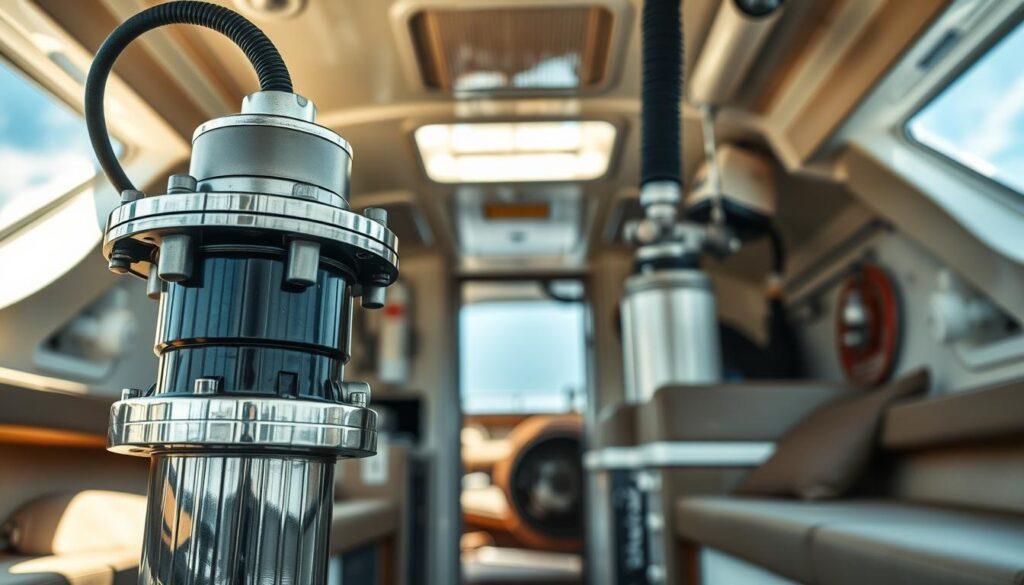
Boats face water problems in storms or rough seas. The pump works automatically, even when you’re not around. It stops small leaks from becoming big problems at sea.
Types of Bilge Pumps
There are two main types of pumps. Automatic pumps turn on by themselves when water rises. They’re great for when you’re not there.
Manual pumps need someone to start them. Many sailors use these as backup systems in case the main pump fails. They offer extra safety on long trips.
Centrifugal pumps are good for moving a lot of water and handle debris well. Diaphragm pumps are better for deep water because they can run dry. The right mix of these keeps your boat safe.
| Pump Type | Activation Method | Primary Benefit | Best Use Case |
|---|---|---|---|
| Automatic | Float Switch/Sensor | Hands-free operation | Daily water management |
| Manual Electric | User-operated switch | Total operator control | Secondary backup systems |
| Centrifugal | Electric Motor | High flow rate | Rapid emergency drainage |
| Diaphragm | Suction/Vacuum | Can run dry safely | Cleaning deep bilges |
Key Components and Maintenance Steps
Keeping your boat safe involves knowing the parts of the bilge system. It has three key parts: the pump, the float switch, and the electrical wiring. If any part fails, your boat could be in danger during storms or leaks.
Regular maintenance steps help avoid unexpected problems. Check each part’s condition often. A little effort now can prevent big emergencies later.
It’s also important to keep the bilge area clean. Dirt, hair, and wood chips can block the pump or switch. Use safe cleaners to remove oil and sludge that can mess with sensors.
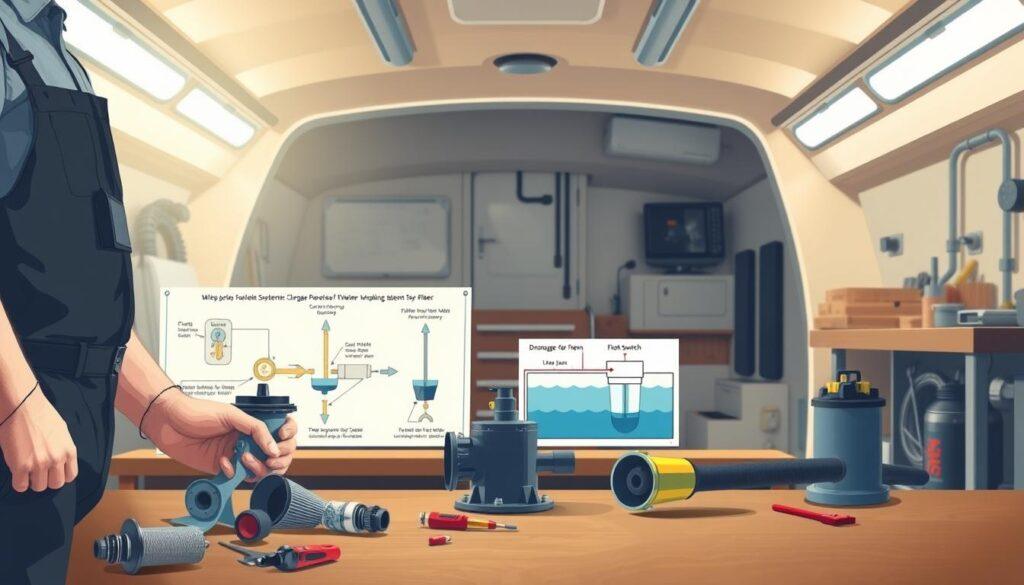
Inspecting and Testing the Bilge Pump
First, inspect the power supply and electrical connections. Look for corrosion or green buildup on wires. Saltwater can damage copper quickly. Make sure all connections are tight and protected.
Also, check if your battery has enough voltage for the pump. Testing the system is key to safety. A weak pump may need to be replaced soon.
To complete your maintenance steps, test the system manually. Lift the float switch to see if the pump starts right away. If the pump runs but doesn’t move water, check the hose for blockages.
- Remove any standing water to look for hidden debris.
- Scrub the pump strainer to ensure maximum water flow.
- Apply a moisture-displacing spray to exposed electrical terminals.
- Check the discharge thru-hull fitting for cracks or obstructions.
| Component | Action Required | Recommended Frequency |
|---|---|---|
| Bilge Pump | Clear strainer and test motor | Monthly |
| Float Switch | Manual lift and activation test | Before every trip |
| Electrical Wiring | Inspect for corrosion and wear | Every 6 months |
| Bilge Basin | Deep clean and debris removal | Seasonally |
Testing and Replacing the Float Switch
The float switch is key to your bilge system. It tells the pump when to start. Without it, your boat could take on water while you’re away.
Regular testing is important. Lift the float manually to see if the pump works. If it doesn’t, there might be an electrical or mechanical issue.
Pouring water into the bilge is another way to test. If the pump doesn’t turn on, you might need to fix it before your next trip. Keep the area around the switch clean to avoid problems.
Troubleshooting Float Switch Issues
Debris like wood chips can block a float switch. Clean the housing often to avoid this. It helps keep the system working.
Electrical problems are common too. Saltwater can damage wire connections. Check the connections and seal them with heat-shrink tubing to prevent corrosion.
If the switch can’t be fixed, replacing it is easy. Disconnect the power, remove the old switch, and install the new one. Make sure the wiring is above water to last longer.
| Symptom | Possible Cause | Recommended Action |
|---|---|---|
| Pump won’t start | Stuck float arm | Remove debris from the base |
| Pump runs constantly | Short circuit | Inspect and replace damaged wiring |
| Intermittent power | Corroded terminals | Clean connections and apply sealant |
| No response to lift | Internal sensor failure | Install a new replacement switch |
Installing a Backup Pump System
Safety on the water is key, and having a backup for your boat’s bilge is essential. A single pump might handle small leaks, but it can fail during big ones. Adding backup systems ensures you’re covered if the main pump goes down.
Installing a backup pump is more than just adding another pump. You need to place it higher than the first one. This way, it kicks in only when water levels get high. You also need special wiring and a separate hose to avoid clogs.
Just like you take care of your engine, your bilge system needs attention too. Use professional tips for the right wiring and fuses. This keeps the pump working well and prevents fires.
Benefits of a Backup Pump System
Having a backup pump means peace of mind, even in bad weather or when you’re away. If the main pump fails or gets stuck, the backup kicks in. This keeps water away from your engine and electrical panels.
A secondary system also boosts your boat’s emergency water discharge. High-capacity backup systems can handle a lot of water fast. This could save your boat from sinking.
Keep your systems in top shape with regular checks. Do a bilge pump check every month. Test the backup by pouring water into the bilge to see if it works right.
| Feature | Primary Pump | Backup Pump |
|---|---|---|
| Activation Level | Low (Bottom of bilge) | High (Above primary) |
| Primary Purpose | Daily nuisance water | Emergency flooding |
| bilge pump check Frequency | Before every trip | Monthly or seasonal |
| Power Source | Main battery bank | Independent battery bank |
Troubleshooting Common Bilge Issues and When to Call for Professional Assistance
Keeping your boat dry is key. Regular checks of boat equipment are essential. Small leaks or clogs can turn into big dangers if not fixed early.
Resolving Typical System Failures
Debris like fish scales or plastic bits often causes problems. They block the pump intake. This leads to the motor overheating.
Clean your Rule or Jabsco pump strainers after each trip. This ensures water flows freely. Also, check electrical connections for green corrosion. Corroded wires can stop power to the system.
At times, you might need a pro for complex repairs. If you spot cracks in the hull or primary through-hull fittings, get help. West Marine experts can check internal motor shorts that are hard to spot. Regular checks prevent most mechanical issues from becoming costly repairs.
Knowing your limits is important. Ask for help when you need it. Proper care keeps your boat safe on long sea trips.